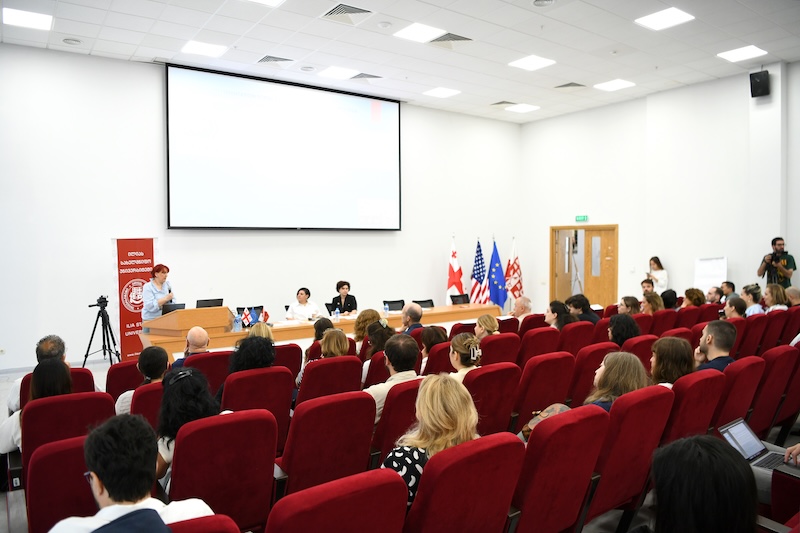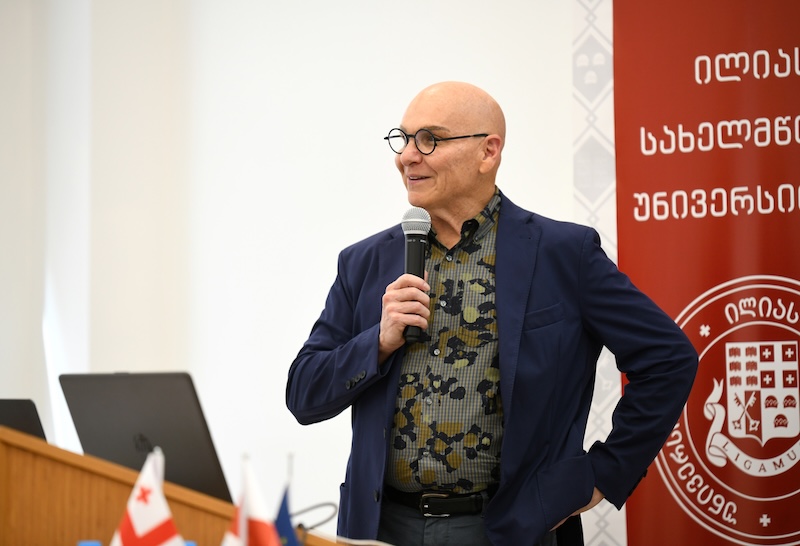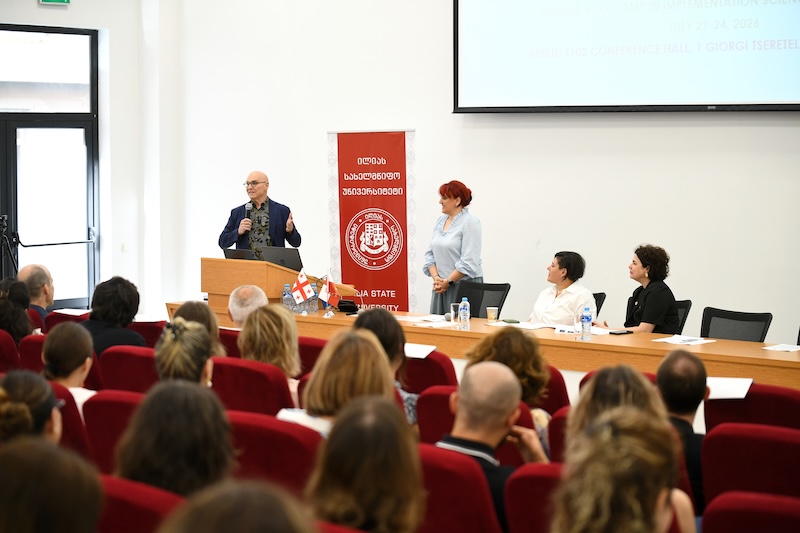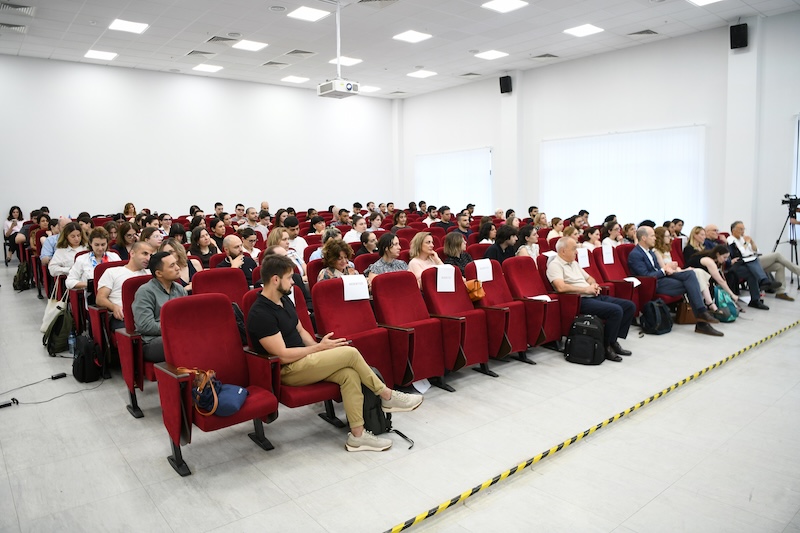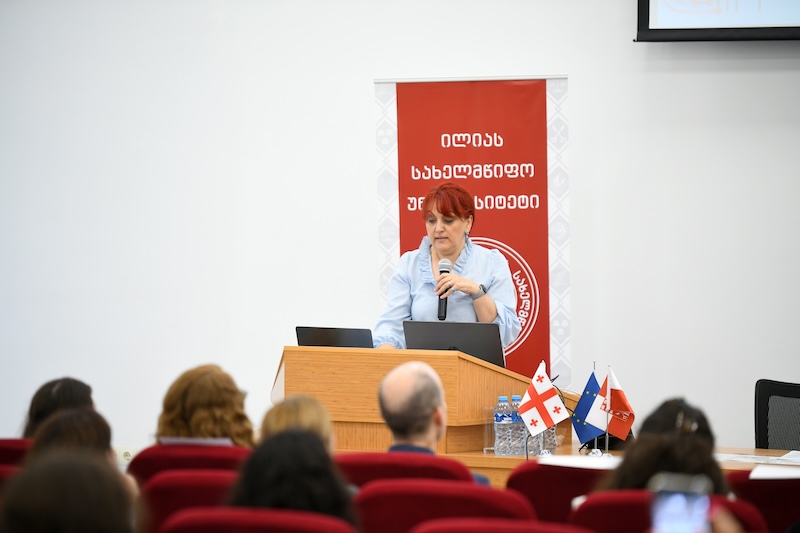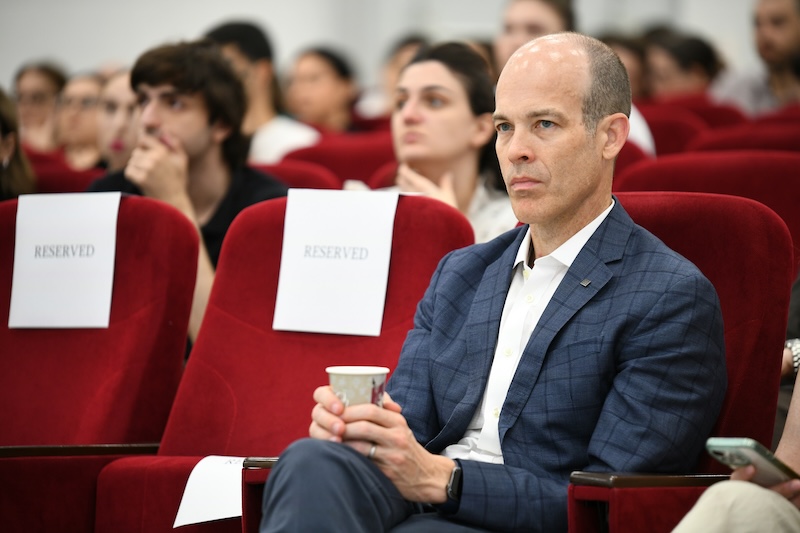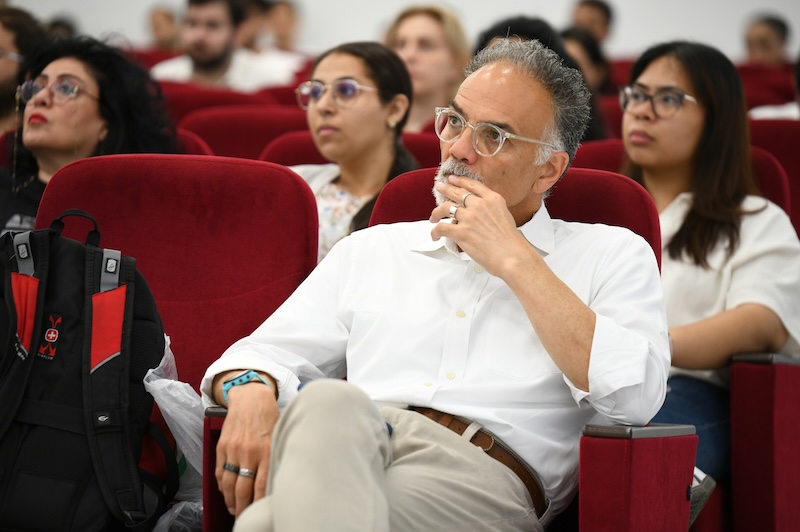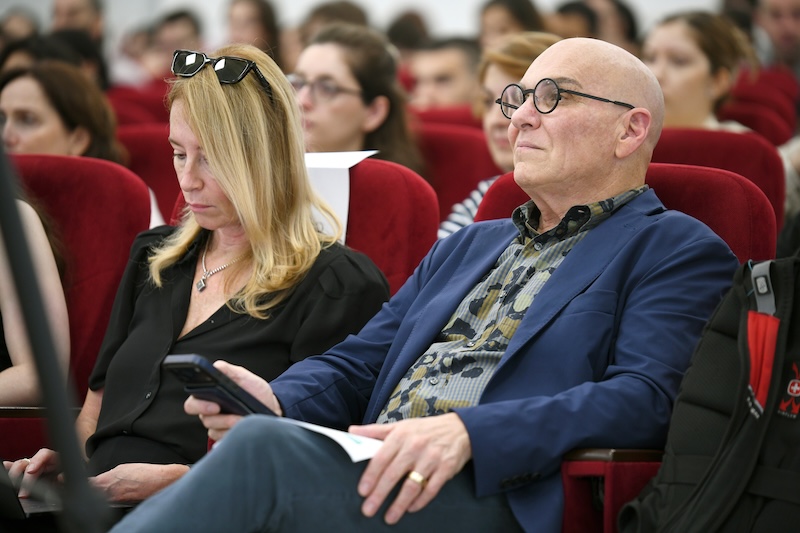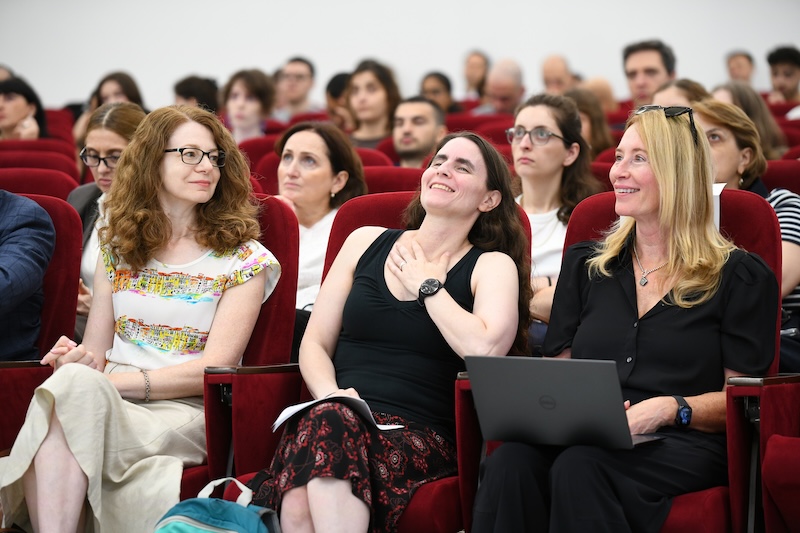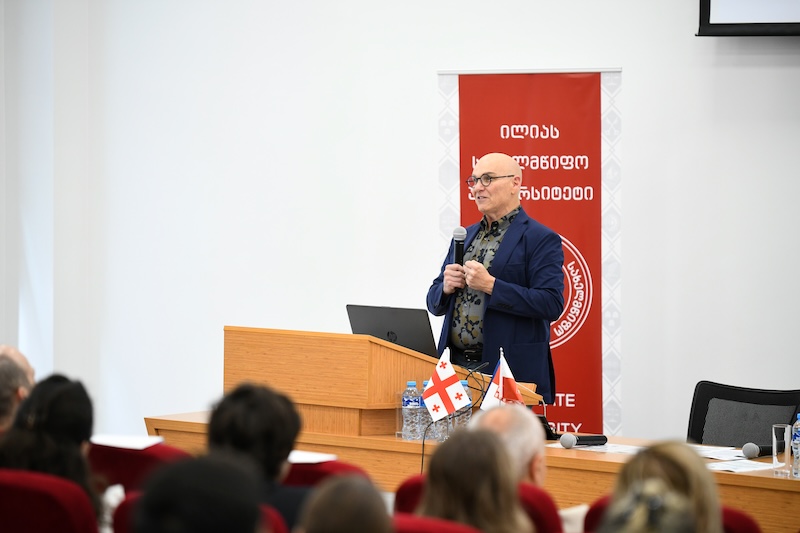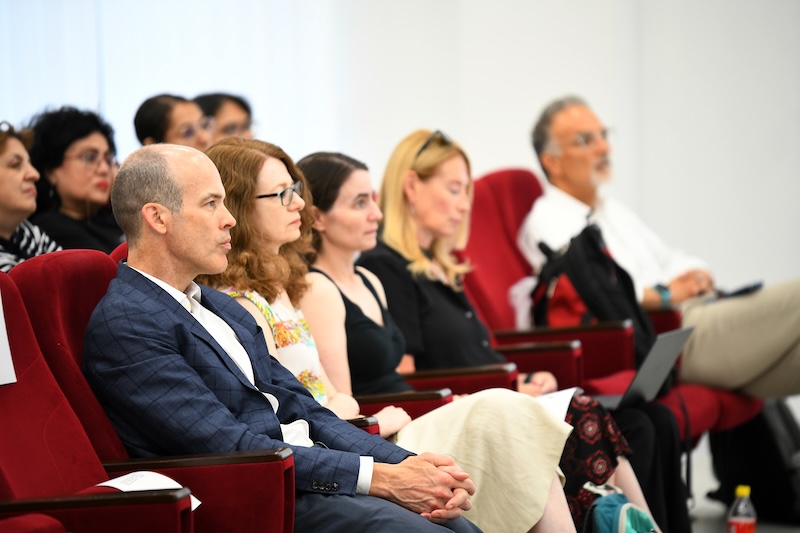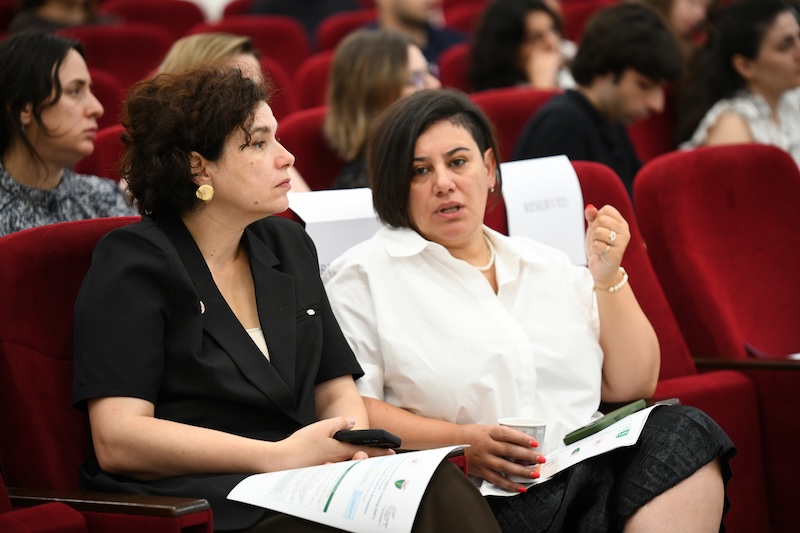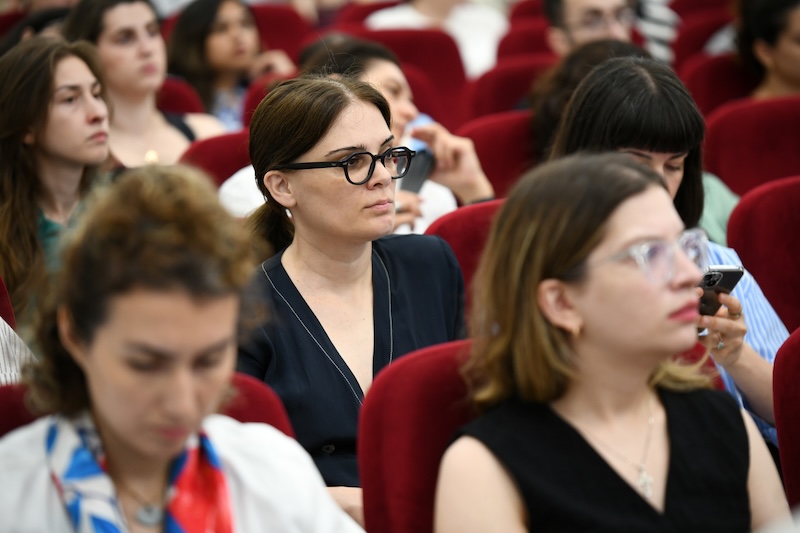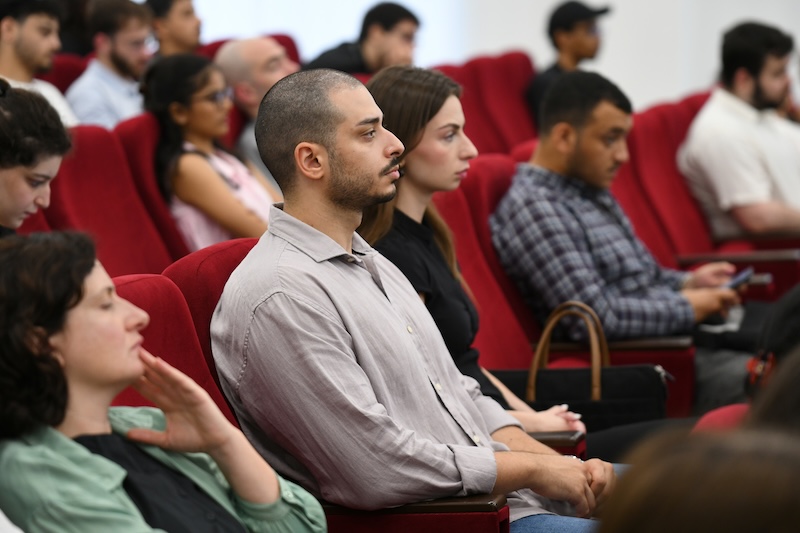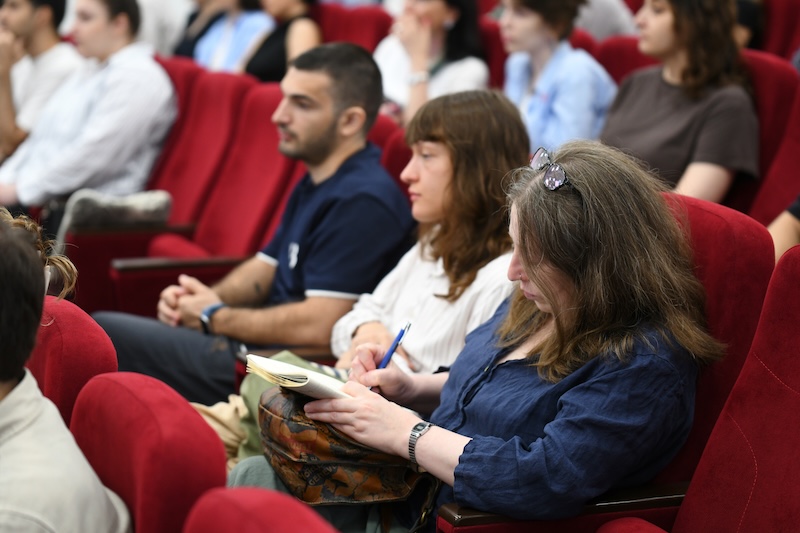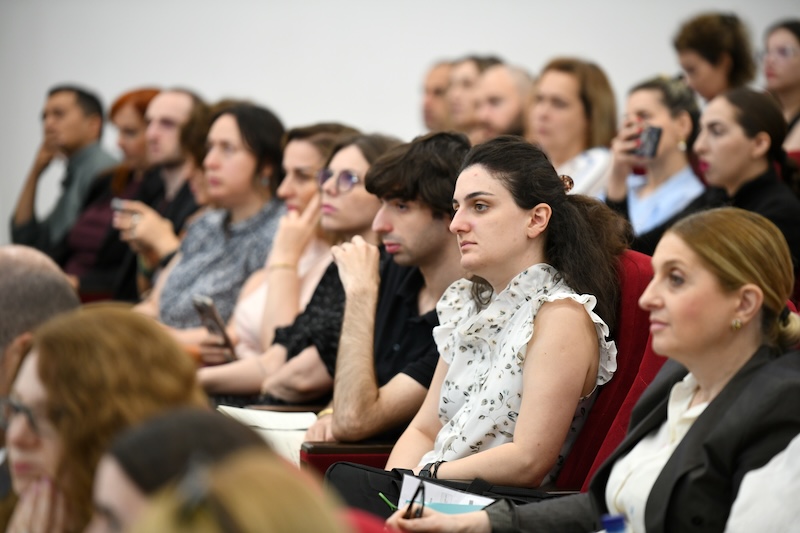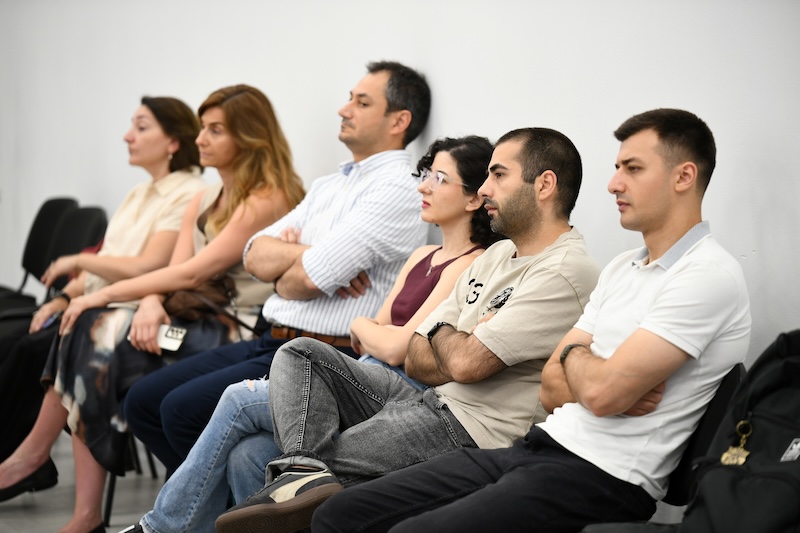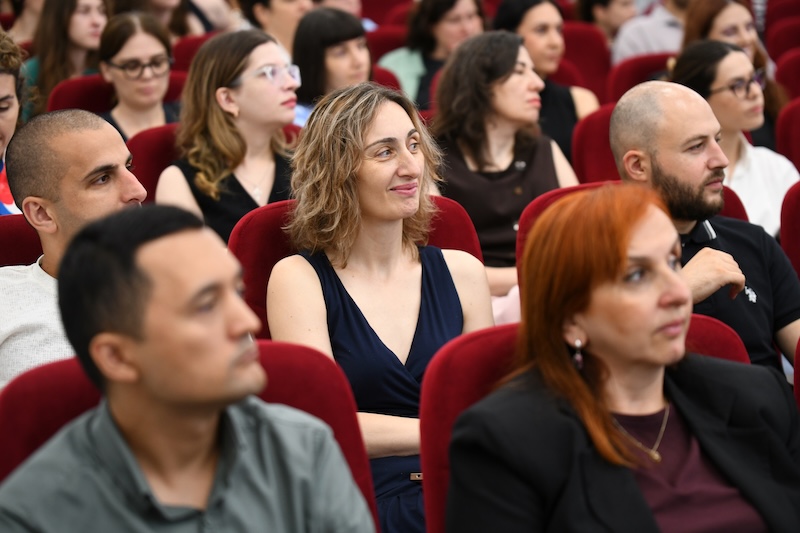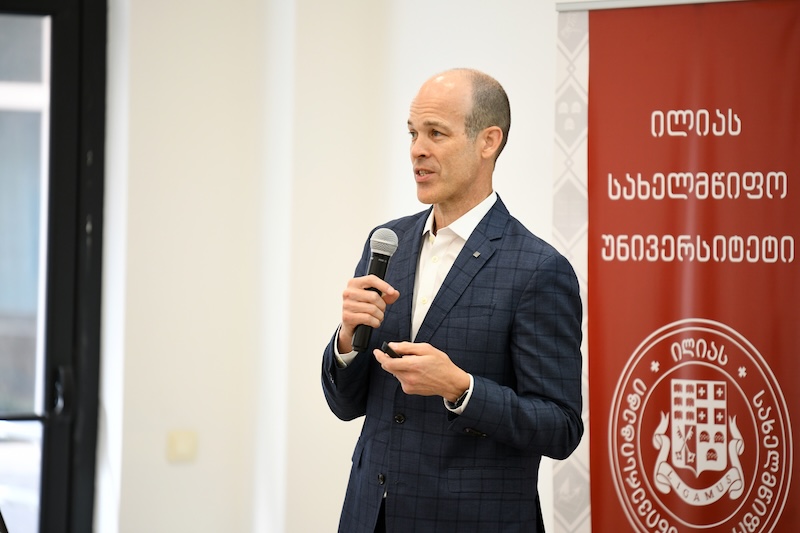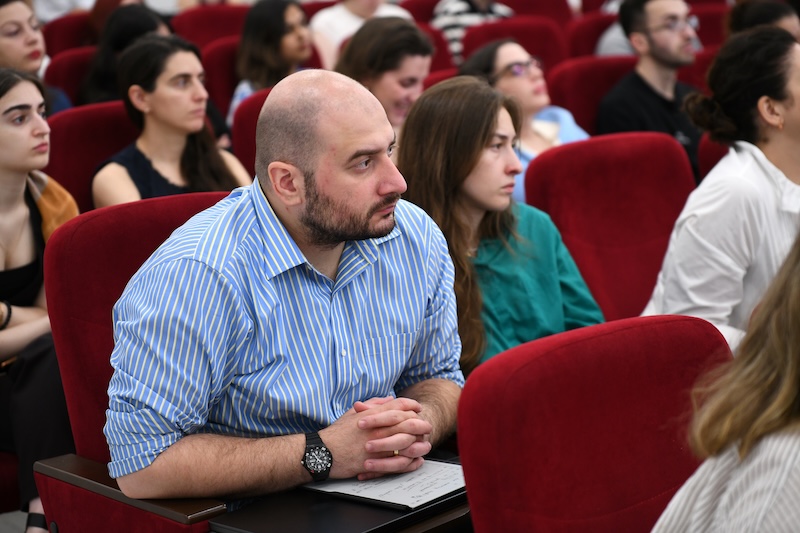
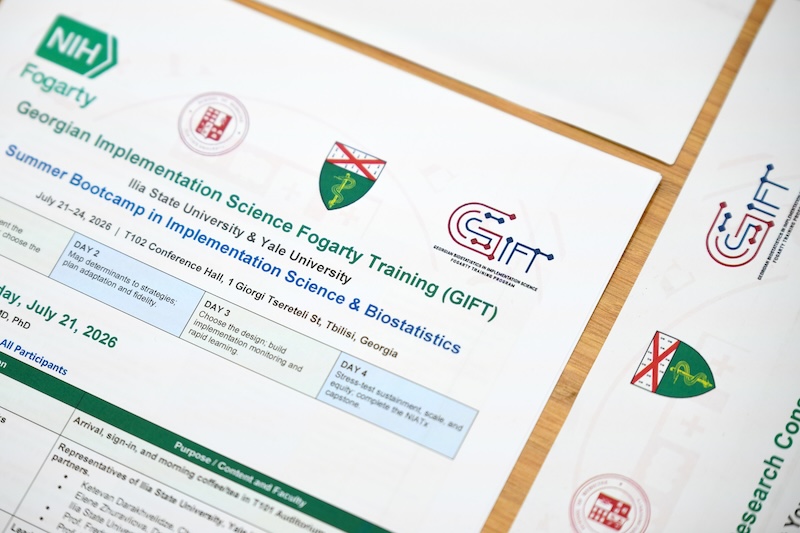
The GIFT Summer Bootcamp 2026 successfully completed its first day at Ilia State University, bringing together researchers, clinicians, public health professionals, faculty members, and graduate students for an intensive program in Implementation Science and Biostatistics. The four-day Bootcamp is jointly organized by Ilia State University and Yale University through the GIFT Program, supported by the Fogarty International Center of the U.S. National Institutes of Health (NIH).
The Bootcamp was officially opened by representatives of Ilia State University and Yale University, highlighting the importance of international collaboration and continued investment in strengthening implementation science capacity in Georgia.
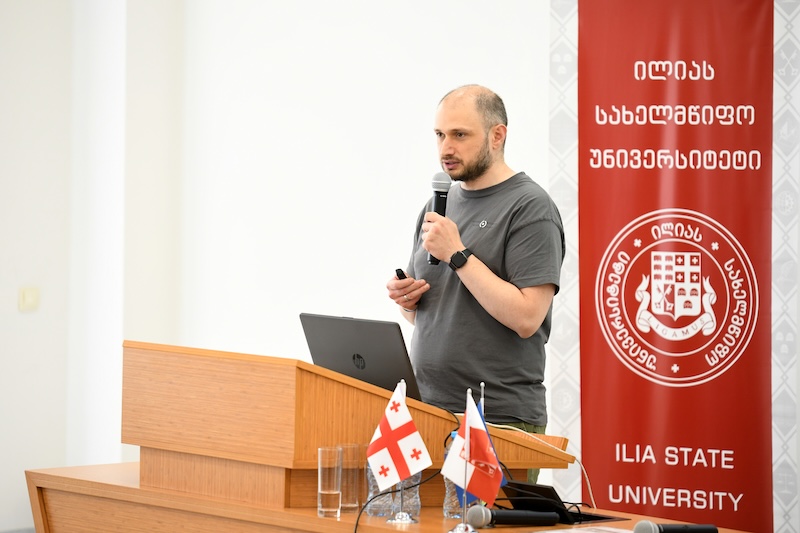
The scientific program began with two engaging didactic sessions that established the conceptual foundation for the week. Prof. Frederick Altice introduced participants to the core principles of implementation science through his lecture, Closing the Implementation Gap: Why Evidence Fails to Reach People and Change Policy, emphasizing the critical role of implementation strategies in bridging the gap between scientific evidence and real-world practice. This was followed by Prof. Luke Davis, who presented Adaptation Without Drift: Core Components, Adaptable Periphery and Fidelity, introducing participants to widely used implementation science frameworks, including CFIR, TDF, EPIS, RE-AIM, Proctor’s Implementation Outcomes, and the Implementation Research Logic Model (IRLM).
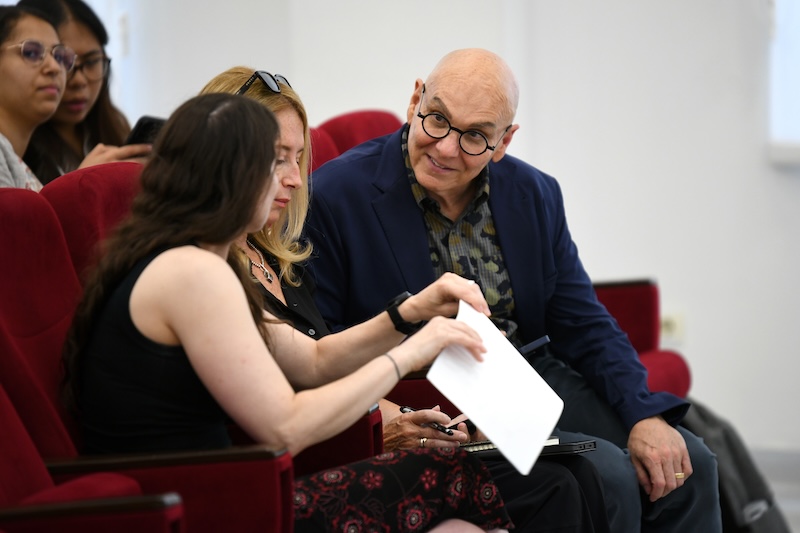
The morning concluded with an interactive Skill Lab led by Prof. Lynn Madden, where participants worked in small groups using a real-world case study to identify implementation gaps, explore determinants, conduct landscape analyses, and select appropriate conceptual frameworks for implementation research.
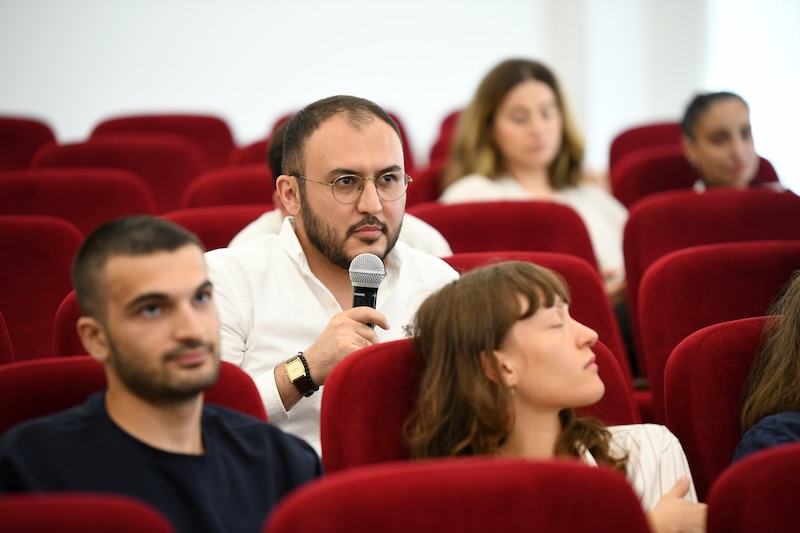
In the afternoon, participants divided into three parallel tracks. The Implementation Science Track explored the hepatitis C care continuum in Georgia through an Implementation Decision Lab, followed by the K43 Scholar Design Clinic, the GIFT Scholar Design Studio, and the Implementation Design Forum, where GIFT scholars presented their implementation research concepts and received feedback from Yale and Ilia State University faculty.
At the same time, participants in the Core and Advanced Biostatistics tracks participated in lectures and hands-on practical sessions covering descriptive statistics, probability, sample size determination, power calculations, and cluster-randomized trial designs, strengthening the methodological foundations required for high-quality implementation research.
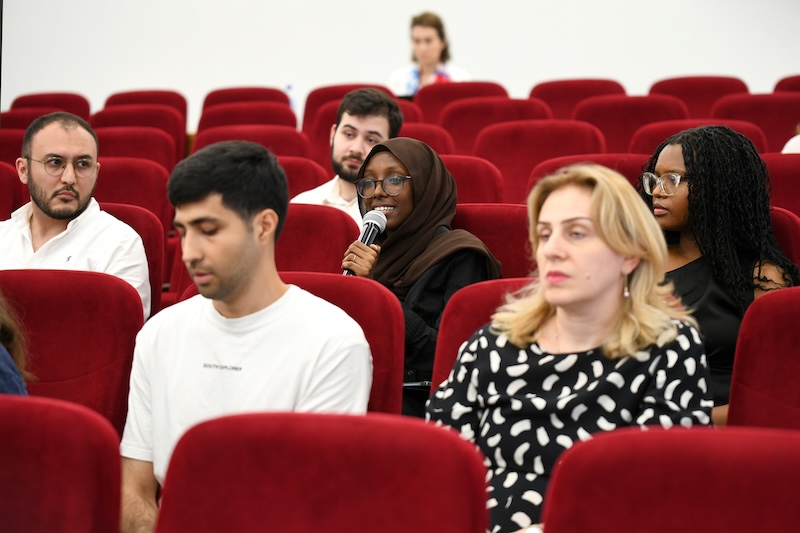
Day 1 concluded with lively discussions, collaborative learning, and active engagement between participants and faculty, setting the stage for the remaining days of the Bootcamp. Throughout the week, participants will continue developing practical skills through interactive workshops, scholar presentations, case-based learning, and hands-on training in implementation science and biostatistics.